
Exploring the Area Around the Blue House
We introduce an in-depth walking course in downtown Seoul where you can stroll along the antique stone walls of Gyeongbokgung Palace and the Blue House, reflecting on the traces of our history at sites like the National Folk Museum of Korea and the site of Empress Myeongseong's assassination.
Gwanghwamun Gate
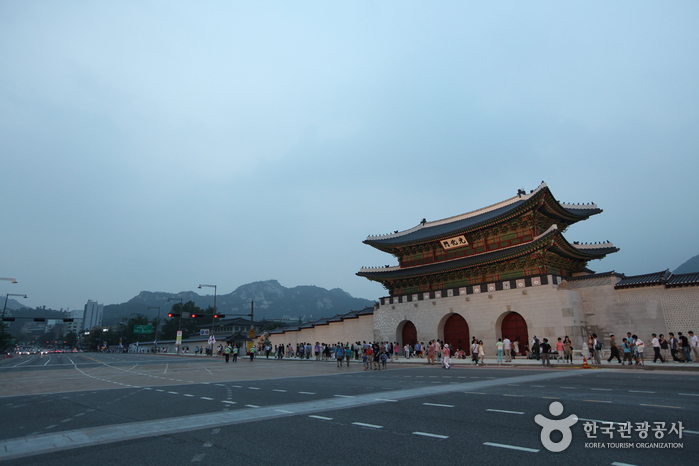
Gwanghwamun is the southern and main gate of Gyeongbokgung Palace. While it served as the main entrance for the king, it was also the main gate of Gyeongbokgung, the legal palace of the Joseon Dynasty, making it grander and more magnificent in scale and formality than the gates of other palaces. Additionally, Gwanghwamun is the only gate among the five major palaces of Joseon to feature a gate-tower structure, with Dongsipjagak and Seosipjagak pavilions at the east and west ends of the wall, respectively.
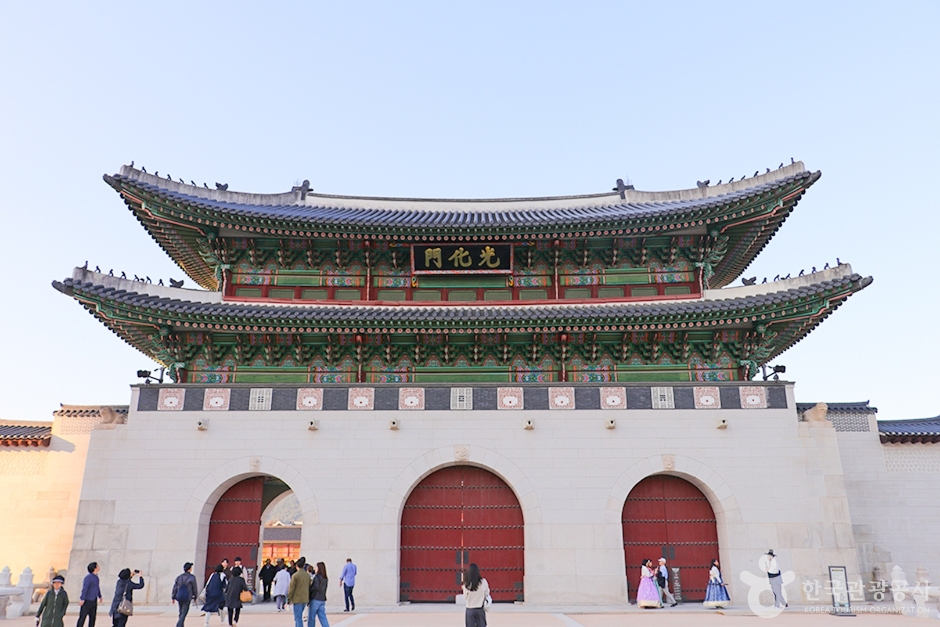
Gwanghwamun consists of three arched gates in the stone foundation supporting the two-story gate tower; the central arch was for the king, while the side arches were for the crown prince and officials. A bell was hung in the gate tower to signal the time. The fact that Gyeongbokgung was the legal palace of the Joseon Dynasty is evident in the form of its gates, including Gwanghwamun. While other palace gates are built on low platforms, Gyeongbokgung's gate is built on a high stone foundation with arched gates in the center, resembling a fortress gate. Gwanghwamun, with its three arches, displays the highest level of formality, clearly indicating its status as the main gate of the legal palace.
Geoncheonggung Palace

Geoncheonggung Palace was built in 1873 (the 10th year of King Gojong's reign) as a residence for the king and queen within the palace grounds. 'Geoncheong' means 'the sky is clear,' and it is located at the northernmost point of Gyeongbokgung. The building was constructed following the style of a private noble's house, with added ornate and delicate decorations. It consists of Jangandang, the king's living space, and Gonnyeonghap, the queen's living space, which are connected by a corridor.

King Gojong and Empress Myeongseong lived here for about 10 years. However, in 1895 (the 32nd year of King Gojong's reign), the Eulmi Incident occurred at Okhoru in Gonnyeonghap, where Empress Myeongseong was assassinated, leading King Gojong to move to the Russian Legation the following year. It was demolished in 1909 (the 3rd year of the Yung-hui era), replaced by an art museum during the Japanese colonial period, and restored to its current appearance in 2007.
Road in Front of the Blue House

The road in front of the Blue House stretches from 162 Palpan-dong (Samcheong-dong-gil) to 98-6 Gungjeong-dong (Hyoja-ro), passing by the Blue House. It was named for its location in front of the Blue House. First named on March 31, 1988, it was once closed to the public as it crosses between the northern wall of Gyeongbokgung and the Blue House at the foot of Bugaksan Mountain.

Entering the road in front of the Blue House, you can enjoy a walk under the shade of lush trees and beautiful flower beds. Opposite the Sinmumun Gate, the northern gate of Gyeongbokgung, lies the Blue House, and at the end of the road is the Chunchumun Gate, the press center of the Blue House. Samcheong-dong-gil, which leads from Chunchumun to Geonchunmun, the main gate of Gyeongbokgung, is lined with galleries where you can appreciate art. From Gyeongbokgung Subway Station, following Hyoja-ro to Hyoja Intersection, you will find the Hyoja Sarangbang, a fountain, Mugunghwa Garden, Yeonmugwan, Daegogak, and Yeongbingwan.
National Folk Museum of Korea
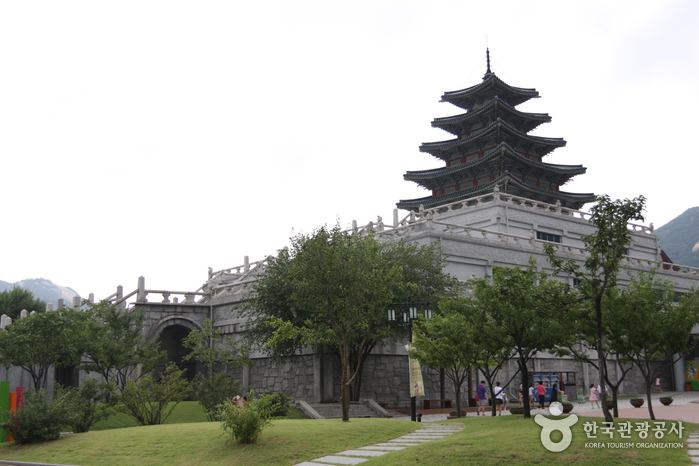

The National Folk Museum of Korea is located within Gyeongbokgung Palace and is the only national comprehensive museum in the country dedicated to folk life, exhibiting over 4,000 folk materials related to traditional Korean lifestyles. The main building also houses the Children's Museum, and the exhibition halls consist of three permanent exhibitions themed around the daily life, annual customs, and life cycle of Koreans, as well as special and outdoor exhibitions.

The outdoor space features statues of the twelve zodiac animals, Jangseung (totem poles), a millstone, and the 'Street of Memories,' which recreates the alleys of the 1970s and 80s. Various cultural education activities, including educational programs, traditional holiday events, and experiences for foreigners, are operated through the website.

The National Children's Museum of Korea is an experience-oriented museum designed for children to learn about traditional Korean culture in an easy and fun way. It is located next to the second exhibition hall of the main building of the National Folk Museum of Korea, and admission is free. Entry is limited to 50 people per session, 30 minutes each, and experiences are operated at scheduled times. It is an educational space where children can naturally learn and experience traditional culture through various exhibitions and activities.
The stone wall road in front of the Blue House is a great place for a walk, as it is near the palaces of Seoul. A day spent exploring the National Folk Museum of Korea and Geoncheonggung Palace near Gyeongbokgung, reflecting on our country, will give you much to think about.